

How Nic is creating a classroom where every pupil feels seen, safe and valued
Inclusive teaching gives pupils the language, confidence and space to understand different perspectives.
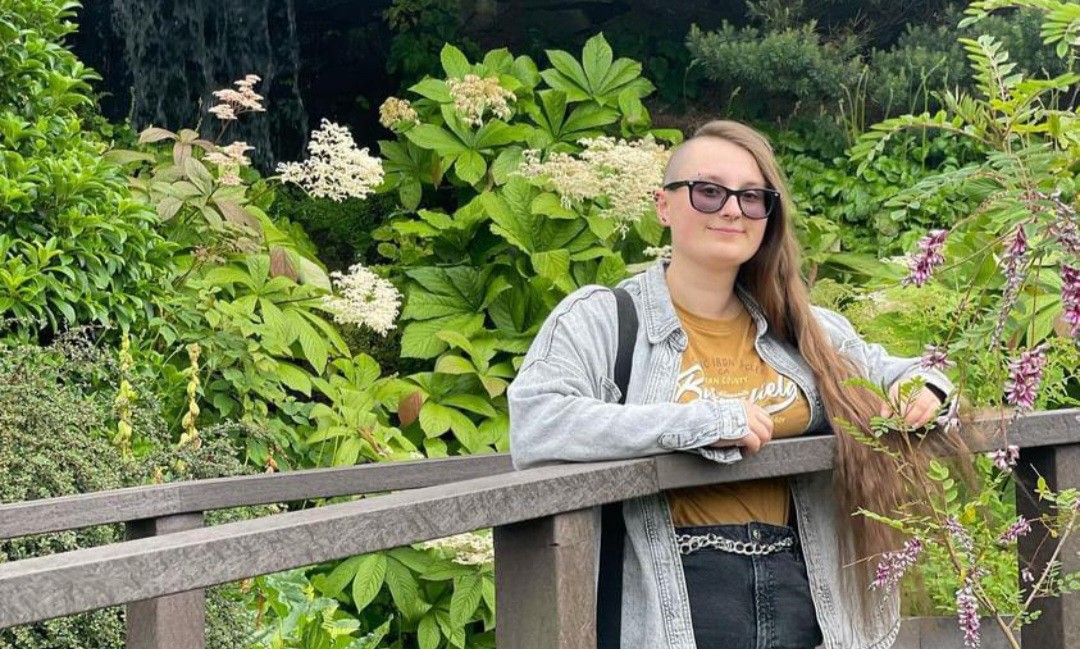
Nic, an English teacher trainee on our Training Programme, is creating a classroom where every pupil feels safe to be themselves. Through open conversations and inclusive teaching, Nic is helping pupils explore different perspectives and challenge harmful attitudes – building respect, understanding and belonging in every lesson.
Here, Nic tells us more:
I’ve wanted to be a teacher since around the age of 12 (before then I wanted to be a waitress, marine biologist or to join the circus). I’ve always loved reading books and a career where I got to read and analyse books all the time sounded great.
As I’ve grown up, I’ve learned to appreciate my inner student of English Literature even further. English Literature helps you to see the world from difference perspectives and encourages imagination in a way that will always help you in life. The world would be a much better place if people considered experiences and viewpoints outside of their own, with imagination bolstering society to change in amazing ways.
Centring inclusion in the classroom
I’m lucky to work in a school that’s teaching Boys Don’t Cry (a novel which explores teenage parenthood from a male perspective, following 17-year-old Dante as he unexpectedly becomes a single father). The novel covers such a wide range of important topics that society needs to be educated better on.
Topics such as race and gender and the queer community are often seen as issues to tackle or topics that must be shied away from in conversation for fear of saying the wrong thing or not wanting to consider society at a deep or serious level. But treating these topics as taboo is doing more harm than good. If people don’t understand these topics, then they won’t be able to understand their peers or society around them.
I know, from personal experience, that school does not always feel like a safe space and that sometimes peers can say harmful things.
I wanted to make sure that my classroom is a safe space, and students know that they can always come to me if anything negative is being said to them.
Tackling challenging topics
Before we started discussing the themes in Boys Don’t Cry, I made it clear that everyone is different and deserves respect. I told my students that I would answer questions and I allowed students chances to discuss their opinions and thoughts and what they believed or had heard.
There were questions that were ignorant and could be considered offensive (e.g. ‘why do people choose to be gay?’). But these were perhaps the most important discussions.
I could provide students with a perspective of life and the LGBTQIA+ community they may not have encountered before.
The importance of inclusive language
It is my opinion that language should be clear and correct. From the start of the topic, I insisted that students used the correct terms for what we were discussing (for example ‘homosexual’ instead of ‘gay’). This helped to separate our conversations from some of the content they may see online and also ensured that they understood that this topic is real and serious.
The word ‘queer’ is used in a derogatory way about halfway through Boys Don't Cry. There was a mixed reaction to this word; some students gasped, some students weren’t sure what the word really meant, and some students did not realise that it was offensive.
I explained that some words change meaning over time and that some communities are reclaiming words that were once used to harm them.
I put together a brief sheet about the history of the word ‘queer’ and went though it with my classes. This led to discussions around who can say what words and why groups may reclaim slurs.
The challenges
I was not expecting such a lack of knowledge surrounding the topic of the LGBTQIA+ community. There were many lessons where I had to fill a gap of knowledge and I created many resources that I didn’t realise I would need. I also struggled with the LGBTQIA+ topic specifically, as it is a community that I belong to.
Seeing the impact
There is an event that will stay with me for the rest of my life. I wear a PRIDE flag pin badge on my lanyard. My first week teaching, a student waited until after the lesson to tell me that they liked my badge. The next week, that student showed me their own PRIDE flag pin badge that they had put on their blazer. They told me, “Look Madam, I have one just like yours,” and they smiled.
I know that that student feels seen, safe, and welcomed and accepted in my classroom.
Around December time, a few students were complaining about the school uniform and mentioned how it was unfair that boys could only wear trousers, but girls could wear skirts or trousers. One of the students said that boys could wear skirts too and another student replied, “No that’s ridiculous, skirts are for girls,” and, immediately, about five pupils shouted, “Clothes don’t have a gender!” Which is a phrase I said a lot when teaching gender expectations in the Boys Don’t Cry topic.
PRIDE month started last week and a few of my students started talking to me about how they were excited for ‘their day’ in PRIDE month and then left the classroom saying, “Happy PRIDE month Madam!”
Celebrating inclusivity
I make it clear that everyone is different, but no one is lesser.
Hopefully it is emphasised through my teaching.
Representation matters. When picking poems for my Year 7s or writing examples of language devices, I always try to include a diverse range of viewpoints and speakers. I ensure that my language is always appropriate and that I’m informed on the sensitive topics that may come up in class.
I’m honoured to be a finalist in the Queer Student Awards, and that my work has been considered good by numerous people. I’m happy that this is an award and that importance is being placed on teaching inclusively.
Help more pupils feel safe, seen and supported in school
Become a teacher, and build classrooms where every pupil can thrive and be themselves.